Advertisement
Click to download now, finish the installation quickly, and directly unlock the all-round experience
Advertisement
Screenshots









Click to download now, finish the installation quickly, and directly unlock the all-round experience
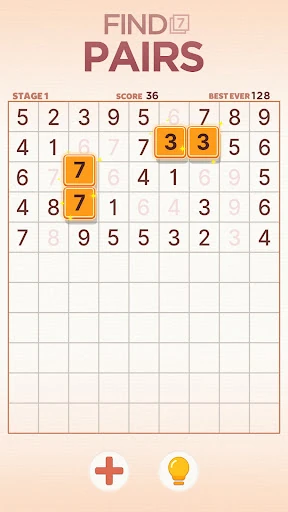
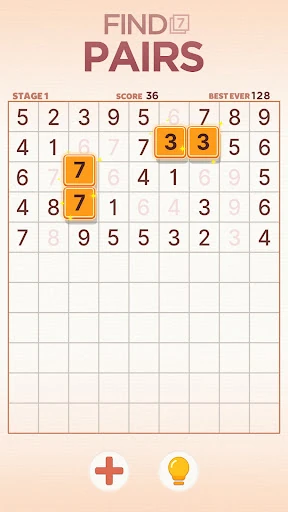
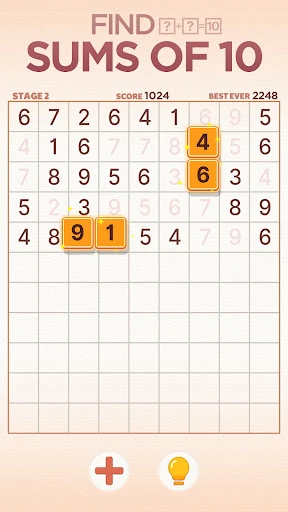
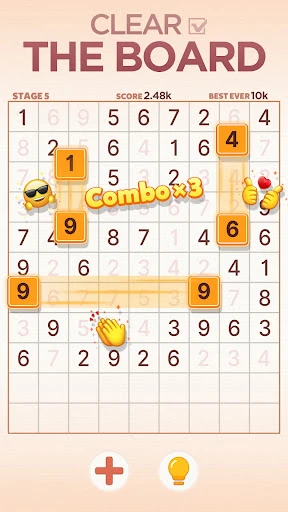
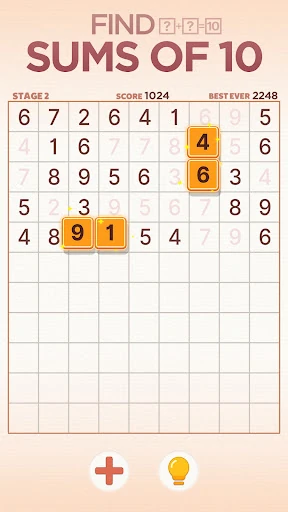
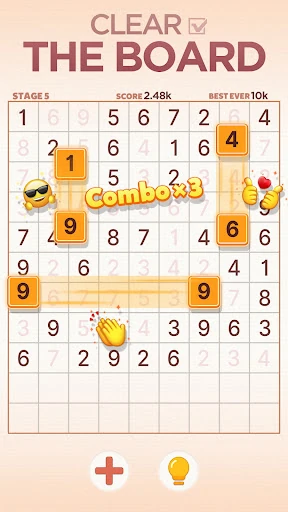
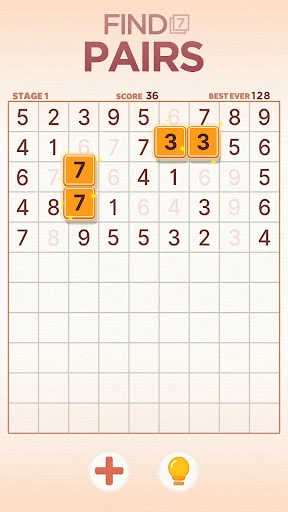
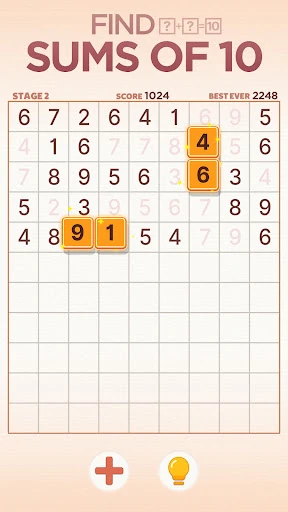
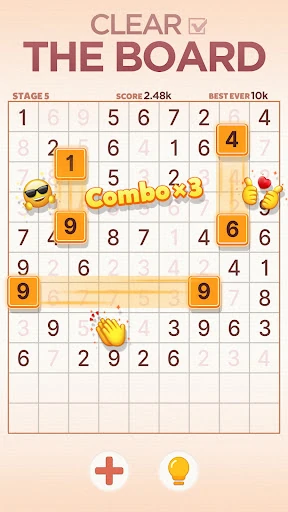
Daily Number Match is a logic puzzle from Game Maker Ltd. You clear a board by finding two numbers that are identical or add up to 10. A pair can be removed when the numbers line up in a row, column or diagonal without another number between them. When a row is cleared, the remaining numbers shift up; if you run out of pairs, a plus button adds the remaining numbers back to the grid so you can look for more.
It suits people who like scanning a board for patterns and working through a puzzle at their own pace. The rules are simple, but clearing a crowded grid can take patience and careful checking.
The first thing to learn is the pair rule: match equal numbers, or combine two numbers that total 10. From there, each move changes the board and may open up new matches. There is no timer mentioned in the game description, so the challenge is about spotting valid pairs rather than racing a clock. Hints are available if you get stuck.
The listing describes thousands of puzzles, daily challenges and rewards, with seasonal events that offer postcards to collect. It also says the game can be played without Wi-Fi. Those extras sit around a core loop that remains focused on clearing number grids.
This is a better match for players who enjoy quiet, methodical puzzles than for anyone looking for a story, characters or fast action. It exercises attention and basic number relationships, but it is still a puzzle game, not a course in mathematics. Daily challenges give regular players another reason to return; casual players can simply tackle boards when they want a short logic task.
Daily Number Match has a 4.72-star rating from 50,878 reviews and more than 10 million installs. Those figures suggest a broad audience, but they do not tell you whether its repeated grid-clearing routine will stay interesting for you. What it asks for is time spent inspecting the board and willingness to retry when a sequence of moves does not work out.